


Tradie Health: Strengthening Physical and Mental Performance on the Job
ShareTradie Health

For electricians and other physically demanding roles, long hours, heavy workloads and high-pressure environments accumulate strain over time. Repetitive lifting, early starts and constant time pressure contribute to ongoing fatigue, which can gradually reduce energy, concentration and recovery capacity if not managed effectively.
Each August, Tradies National Health Month highlights the physical and mental health risks faced by tradespeople. Led by the Australian Physiotherapy Association, the campaign promotes proactive health habits aimed at reducing work-related injury and improving long-term wellbeing across the industry.
The key message is simple: small, consistent behaviours have a compounding effect on energy levels, injury prevention and mental resilience over time.
From karate mat to Commonwealth Gold: Felix’s approach to performance and wellbeing
We spoke with Felix Stewart, a 20-year-old karate athlete who has trained since the age of four, to explore how elite sport principles can be applied to physical work and everyday performance.
Over the past six years, Felix has competed at the highest level, representing Victoria and Australia, winning a national title and achieving strong international results.
In 2024, he was selected for the Commonwealth Championships in Durban, South Africa, where he won gold in the U21 +84kg division and added a bronze medal in the team event. In 2025, he competed at the Oceania Championships in Noumea, finishing second and earning a World Karate Federation ranking, placing him 30th globally.
Alongside competition, Felix works as a mentor and coach. He has supported Charles Weissel, General Manager of Properties at Middy’s, helping improve fitness structure and lifestyle habits. Observing progress in others has reinforced his focus on consistency, accountability and routine-based improvement.
More recently, Felix has worked with Middy’s to translate elite performance principles into practical health strategies for physically demanding jobs.
Practical health insights for tradies
Drawing on elite sport and coaching, Felix highlights core principles that directly apply to trade environments, where physical load, fatigue and time pressure are constant.
Fuelling the body for sustaind output
Physical work significantly increases daily energy expenditure. Without adequate intake, the body begins to rely on short-term energy reserves, which leads to fatigue, reduced strength and slower recovery. Under-eating during the day followed by heavy evening meals can also disrupt energy stability and sleep quality.
Why this matters:
Stable energy intake supports muscle function, concentration and injury prevention by maintaining blood sugar levels and reducing mid-day fatigue spikes.
Practical approach:
- Prioritise structured meals instead of irregular snacking
- Include protein in each meal to support muscle repair and sustained fullness
- Use slow-release carbohydrates (rice, oats, wholegrain bread, pasta) for steady energy release
- Add fruit and vegetables for micronutrients that support recovery and immune function
Meal prep reduces cognitive load
Early starts and long shifts often lead to reactive eating choices driven by convenience rather than nutrition. Reducing daily decision fatigue helps maintain consistency. When meals are prepared in advance, the brain conserves energy for work performance rather than constant food decision-making.
- Prepare bulk meals 2-3 times per week
- Use simple repeatable meals (chicken and rice, beef and vegetables, wraps
- Store food in ready-to-go containers
- Keep backup options in the vehicle (nuts, yoghurt, fruit, protein bars)
Even moderate improvements in food quality can noticeably improve focus and endurance across a workday.
Hydration supports physical output and cognitive performance
Dehydration directly affects strength, coordination and reaction time. In physical work environments, fluid loss can occur faster than expected, especially in heat. Even mild dehydration reduces blood volume, increasing perceived effort and lowering cognitive sharpness, which can increase error and injury risk.
To combat this:
- Drink water early in the day before caffeine
- Maintain steady intake rather than large infrequent amounts
- Increase hydration during heat or heavy labour days
- Use electrolytes when sweating heavily to replace lost minerals
Recovery drives long-term performance
Workplace strain accumulates when recovery is insufficient. This leads to reduced performance consistency and increased injury risk over time. Recovery allows tissue repair, nervous system reset and energy restoration.
Without it, fatigue compounds rather than resets.
- Aim for 7-9 hours of sleep where possible
- Reduce screen exposure before bed to improve sleep quality
- Use light movement on rest days to promote circulation
- Address minor aches early to prevent escalation into injury
Stress regulation improves decision-making under pressure
High-pressure environments require fast decisions and sustained attention. Poor stress regulation reduces clarity and increases reactive behaviour. Stress affects breathing, heart rate and cognitive processing speed. Controlled regulation helps maintain composure and accuracy under load.
- Use controlled breathing (e.g. 4–4–4 rhythm) to down regulate stress response
- Take short reset breaks during the day to reduce overload accumulation
- Create a brief end-of-day transition routine to separate work and home stress
- Use physical activity as a release, but avoid excessive training when already fatigued
Early recognition of burnout signals
Burnout develops gradually, often before it is consciously recognised. Early intervention prevents long-term fatigue patterns from embedding into sleep, motivation and performance cycles.
Common indicators:
- Ongoing fatigue despite rest
- Increased irritability
- Reduced motivation for routine tasks
- Declining sleep quality
- Increased reliance on stimulants (caffeine, energy drinks)
Talk early, not late
Mental strain rarely improves in isolation. When left unaddressed, pressure builds gradually and can present later as fatigue, irritability or reduced performance. Early communication helps regulate emotional load and prevents stress from compounding into burnout or withdrawal.
- Speak to a colleague, supervisor or family member when stress first builds
- Normalise conversations around workload and pressure
- Be specific about the source of stress rather than generalising it
- Seek professional support early if pressure becomes persistent
Tradie health is not defined by major lifestyle changes. It is shaped by repeatable systems that stabilise energy, improve recovery and support mental clarity under demanding conditions.
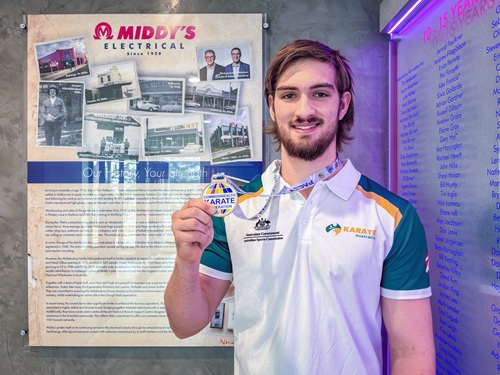
Karate champion, Felix Stewart at Middy's NBSC
Felix’s experience in elite sport reinforces a consistent principle: long-term performance is not driven by occasional intensity, but by structured habits that support recovery and consistency over time

